
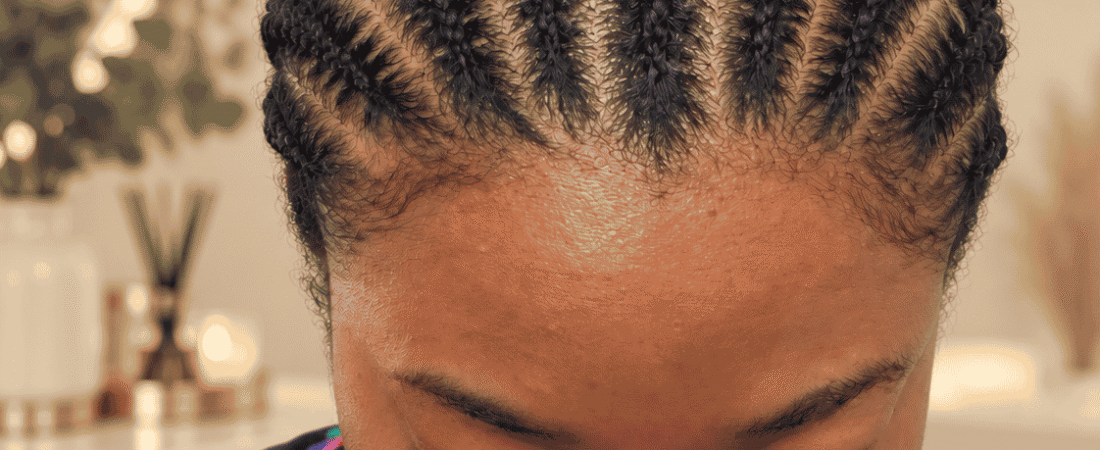
A wig can cover your natural hair.
That doesn’t automatically mean it is protecting it.
There is a difference.
You can braid your hair underneath a beautiful wig and still create unnecessary tension around your edges.
You can wear a “glueless” wig and still place clips in exactly the same fragile spot every day.
You can keep most of your hair tucked away while repeatedly applying heat to the small section you left out.
So if you’re searching for protective style wigs for natural hair, the better question isn’t:
“Is this wig protective?”
It is:
“How am I wearing it?”
Because the wig is only one part of the routine.
What Does “Protective Style” Actually Mean?
At its simplest, protective styling is about reducing some of the things that can place unnecessary stress on your natural hair.
That can include excessive manipulation, friction, repeated heat styling and tension.
For tightly textured hair, giving your strands a break from constant combing, brushing and restyling can be useful.
But “protective” should never mean:
tight, painful or forgotten underneath a wig.
The American Academy of Dermatology warns that hairstyles that repeatedly pull on the hair can contribute to traction alopecia. Tight cornrows, braids, weaves and extensions can all create problems when they place continual tension on the scalp and hairline.
So protection begins before the wig even goes on.
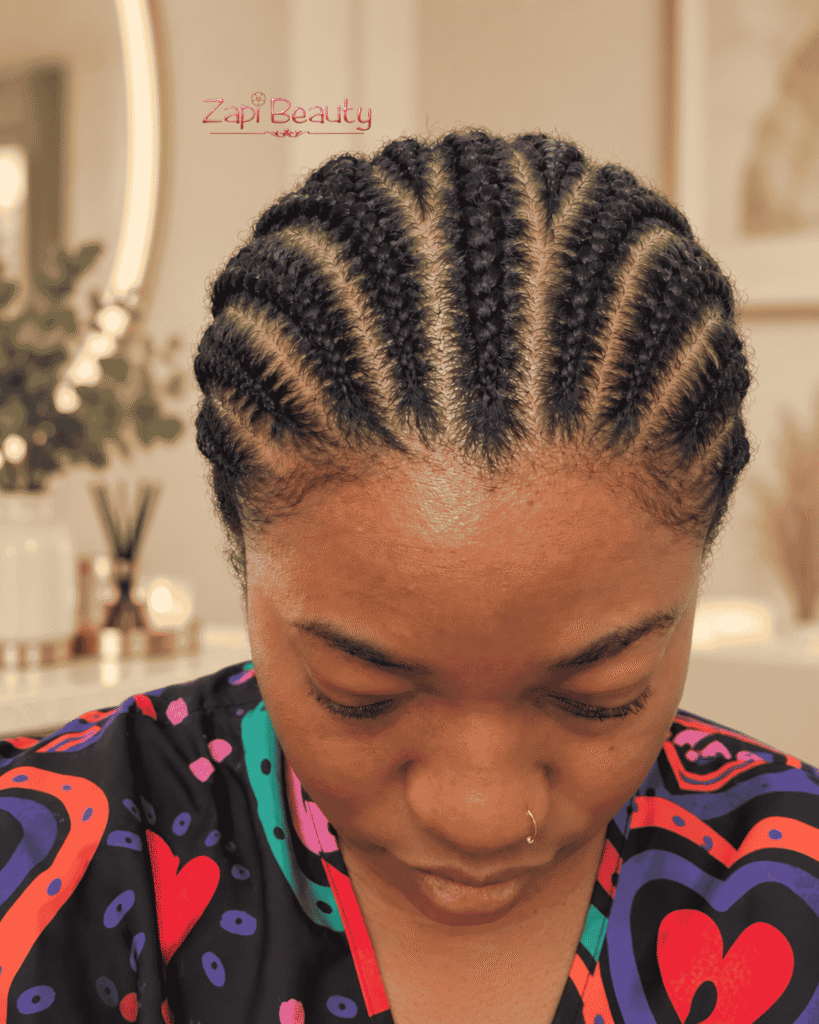
Before the Wig: Your Foundation Matters
Imagine two women wearing exactly the same wig.
The first braids her natural hair extremely tightly because she wants the flattest possible foundation.
The second prepares her hair neatly but comfortably, keeping unnecessary tension away from her hairline.
Same wig.
Very different protective-style routine.
Your braid-down doesn’t have to hurt to be neat.
In fact, pain should not be considered evidence that your hairstyle is secure.
The American Academy of Dermatology’s guidance is refreshingly simple: if a hairstyle feels painful, it is too tight.
That matters particularly around the temples and hairline.
A slightly less “perfect” braid-down is a much better trade than constantly pulling fragile areas simply to make your wig sit one millimeter flatter.
Do You Even Need Cornrows Under Your Wig?
Not always.
This is where wig routines become unnecessarily complicated.
Depending on your hair length, density and the construction of the wig, your natural hair may be prepared using:
flat twists
loose cornrows
small braids
or another low-profile style that comfortably contains the hair.
The goal is simply to create a manageable foundation that allows your wig to sit properly.
You don’t win a prize for having the smallest braids underneath.
And nobody sees them anyway.
Choose comfort.
Where Your Natural Hair Goes Matters
One reason wigs can work beautifully within a protective styling routine is that much of your natural hair can remain tucked away while you change the appearance of your hairstyle.
But there is an important difference between a full wig and a leave-out wig.
With a full wig, practically all of your natural hair may remain underneath.
With a U-Part wig, V-Part wig or half wig, some natural hair remains visible.
That doesn’t make the style bad.
It simply means your leave-out needs its own plan.
The Leave-Out Problem Nobody Talks About Enough
You buy a protective wig.
Most of your natural hair is tucked away.
Wonderful.
Then every morning you flat iron the same one-inch section at 400°F so it can match the wig.
At that point, we have to be realistic about what we’re calling protective.
This is one reason texture-matched wigs can be so useful for natural hair.
If the extension texture already resembles the way you want to wear your 4C hair, you may be able to blend using twisting, braiding, stretching or curl definition instead of repeatedly trying to make tightly textured hair look silky straight.
Dermatologists also recommend limiting frequent use of high-heat tools because heat can weaken hair.
The goal isn’t to never use heat again.
It’s to avoid making intense manipulation a requirement every time you want to wear your wig.
3C vs 4A vs 4B vs 4C Hair — Find Your Texture Match
Protective Doesn’t Have to Mean Full Coverage
This is important for Zapi Beauty because we specialize in styles that allow natural hair to participate in the finished look.
A U-Part wig for textured hair can still fit into a low-manipulation routine.
A textured half wig can too.
The question is what you’re doing with the exposed hair.
Suppose your natural leave-out is styled once with a twist-out that blends beautifully into a kinky-coily wig.
You wear it for several days with minimal restyling.
That is a very different routine from straightening that section every morning.
Protective styling isn’t an all-or-nothing category.
Think about the whole routine rather than the name of the wig.
Why No-Glue Wigs Appeal to Natural-Hair Wearers
For some women, glue is simply not part of the lifestyle they want.
They may prefer a wig they can put on in the morning and remove in the evening.
They may want easier access to their scalp.
They may want to wash and moisturize their natural hair without waiting for a long-term installation to come down.
Or they simply don’t want to deal with adhesive removal.
This is where glueless wigs for natural hair can be particularly convenient.
And glueless does not have to mean glueless lace.
U-Part wigs, V-Part wigs and half wigs can give women alternatives that don’t depend on a lace hairline or adhesive installation.
Glue-Free Wigs for Natural Hair — U-Part, V-Part & Half Wigs Explained
But Clips and Combs Still Need Respect
Removing glue doesn’t give us permission to ignore everything else.
If your wig has clips or combs, pay attention to where they sit.
If you’re placing the same clip into the same tiny section of hair every single day and pulling it tightly, consider changing the positioning when your wig construction allows it.
Security should not require discomfort.
You also shouldn’t need to fasten every possible attachment point simply because it exists.
Your cap size matters here.
A wig that fits your head properly should feel very different from one you’re desperately trying to secure because the cap itself is too large.
This is why fit and protective styling are more connected than people realize.
The Best Protective Wig Is One You Can Remove
One of the most practical advantages of removable wigs has nothing to do with appearance.
You can see your hair.
That sounds obvious, but it matters.
You can remove the wig and notice that your scalp needs washing.
You can see whether your braids are becoming too dry.
You can notice tension.
You can moisturize when appropriate.
You can change your foundation.
You can inspect your edges.
Your natural hair doesn’t disappear simply because you’re wearing extensions over it.
A removable wig gives you easier access to check on it.
That is something I consider a real luxury.
A Better Wig Routine
The protective routine begins on wash day, not installation day.
Start with clean natural hair.
Condition and detangle it carefully.
Prepare the hair in a comfortable style underneath the unit.
Then make sure the wig fits properly before relying heavily on clips or combs to compensate for an incorrect fit.
If you’re wearing leave-out, decide how you will blend it before choosing your wig texture.
And at night?
Don’t automatically sleep in your removable wig simply because you can.
One of the advantages of a wig that is designed to come off is that your scalp and natural hair can be easily accessed again.
Simple.
What About Your Edges?
Edges deserve their own conversation.
They are often the first area we sacrifice for the sake of a hairstyle looking “perfect.”
Everything has to be slick.
Everything has to lie down.
Everything has to stay exactly where we put it.
But excessive tension around the hairline is precisely what dermatologists advise avoiding. The hairline is also one of the areas where early signs of traction alopecia may first become visible.
You don’t need to pull your hairline tightly underneath your wig.
You don’t need a painfully tight braid around the perimeter.
And you don’t need to sacrifice your edges to prove that your wig is secure.
Protective Styling Is Also About Manipulation
Natural hair can be extraordinarily versatile.
That versatility sometimes means we do too much to it.
Detangle.
Stretch.
Twist.
Untwist.
Brush.
Slick.
Restyle.
Straighten.
Curl.
Then repeat three days later.
A wig can give you something valuable:
a pause.
You can choose a hairstyle without rebuilding your natural hairstyle every morning.
That reduced day-to-day manipulation is one of the practical reasons protective styling remains popular among women with Type 4 hair.
But again, less manipulation on top shouldn’t be replaced by excessive tension underneath.
Balance matters.
When a Wig Routine Is No Longer Protective
Your body usually gives you clues.
Don’t normalize a wig installation that causes persistent pain.
Don’t ignore a braid that feels as though it is pulling your scalp.
Don’t convince yourself that your edges being sore is simply part of wearing a wig.
The American Academy of Dermatology lists pain, stinging, scalp crusting and visible pulling of the scalp among signs that a hairstyle may be creating too much tension.
If something hurts, change it.
Beauty should not require you to ignore warning signs from your scalp.
What About Wearing Wigs Every Day?
Daily wig wearing isn’t automatically a problem.
The details matter.
A removable, properly fitted wig over a comfortable foundation is very different from continuously wearing a style that pulls tightly on your hair.
Rotate where possible.
Pay attention to areas experiencing repeated friction.
Keep your natural hair clean and conditioned.
And don’t wait months simply because nobody can see what’s underneath.
Your wig should make maintaining your natural hair easier, not make you forget about it.
Protection Without Hiding Your Texture
There is another reason I love textured wigs for natural hair.
Protective styling has sometimes been presented as though natural hair needs to disappear before we can enjoy versatility.
It doesn’t.
A type 4 hair woman can wear a textured U-Part and allow some of her own coils to show.
She can wear a half wig and let her natural hairline remain part of the hairstyle.
She can wear more length.
More volume.
A different shape.
And still look unmistakably like herself.
That is the philosophy behind Zapi Beauty’s approach to textured hair.
Protection shouldn’t require erasing the texture you’re protecting.
A Simple Test Before You Call a Wig “Protective”
Ask yourself five questions:
Does anything hurt?
Am I constantly pulling on my edges?
Am I repeatedly applying heat to make my leave-out blend?
Can I comfortably access and care for my natural hair?
Does the wig actually fit me?
Those answers tell you far more than the word “protective” printed in a product description.
Frequently Asked Questions
Are wigs a protective style for 4C hair?
They can be part of a protective or low-manipulation routine when the natural hair underneath is prepared comfortably and unnecessary tension, friction and repeated manipulation are minimized. Simply wearing a wig does not automatically make the routine protective.
What is the best protective wig for 4C hair?
It depends on how much natural hair you want exposed. Full wigs can keep more hair tucked away, while texture-matched U-Part, V-Part and half wigs allow some natural hair to remain visible without necessarily requiring glue.
Can I wear a protective wig without glue?
Yes. U-Part wigs, V-Part wigs, half wigs and some other constructions can be worn without adhesive.
Can a U-Part wig be a protective style?
A U-Part can fit into a lower-manipulation routine, but some natural hair remains exposed. How you prepare and maintain that leave-out matters.
How should I wear my natural hair under a wig?
The hair should be clean, comfortably contained and prepared without excessive tension. Cornrows aren’t the only option; the appropriate foundation depends on your hair and the wig construction.
Can tight braids under a wig damage hair?
Repeated tension from tight hairstyles can contribute to traction alopecia, according to the American Academy of Dermatology. Your foundation should not hurt.
Should I give my natural hair breaks from wigs?
Pay attention to your scalp and hair rather than following an arbitrary schedule. Removing your wig regularly can make it easier to clean, inspect and care for your natural hair. If you notice persistent discomfort, breakage or hair loss, address the source of tension and consider speaking with a board-certified dermatologist.
The Wig Isn’t the Protection. Your Routine Is.
That’s the part worth remembering.
A beautiful wig can give your natural hair a break from daily styling.
But the real protection comes from what happens underneath:
less unnecessary tension,
less repeated manipulation,
a thoughtful foundation,
a texture that doesn’t force your leave-out into submission,
and a wig that actually fits.
At Zapi Beauty, we believe wigs should work with textured natural hair.
Not against it.
Our glue-free, no-lace textured hair options are designed for women who want beautiful length and fullness while still maintaining access to the natural hair beneath.
Your natural hair still matters — even when no one can see it.